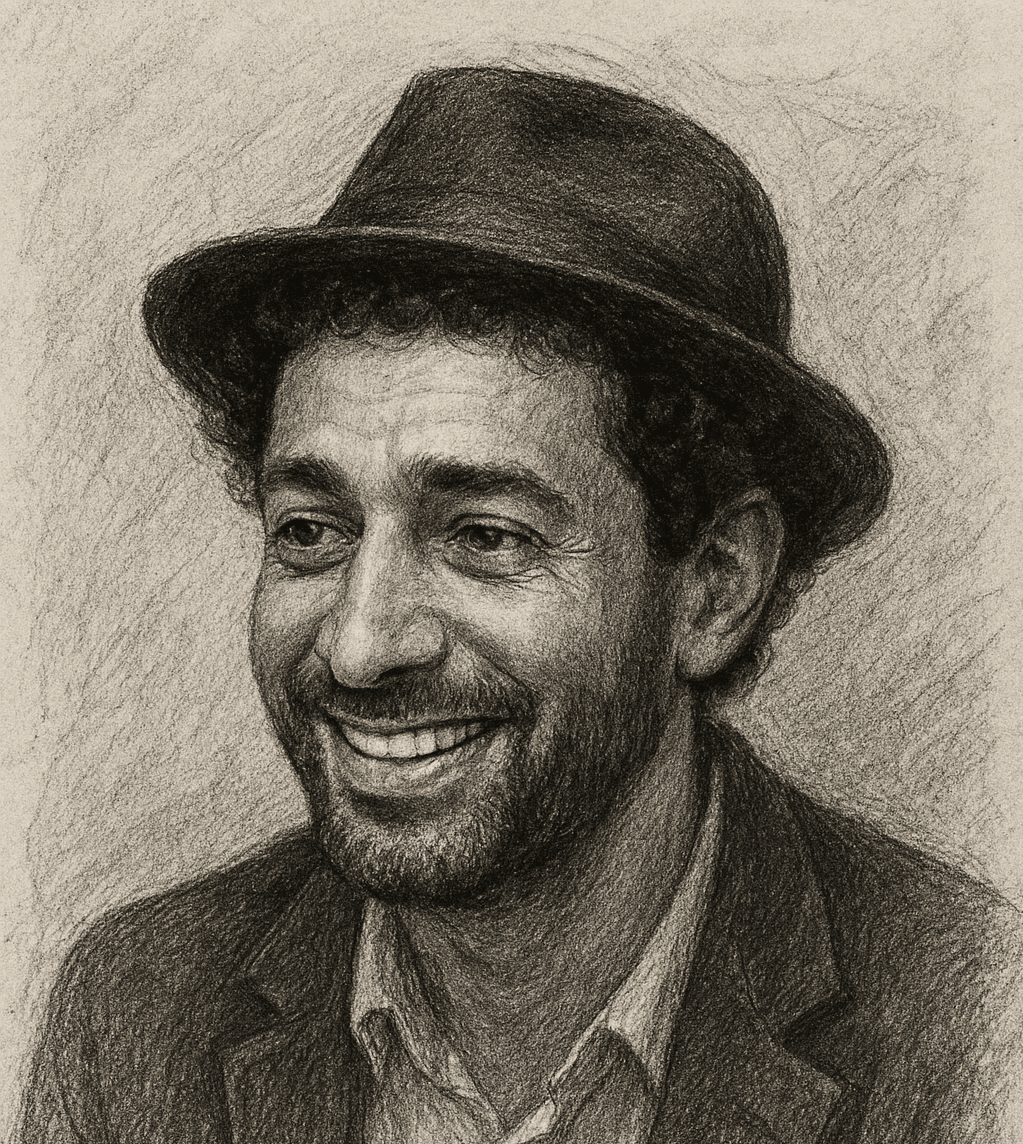
My name is Rafi Koman. I am an investigative story-teller. That's what I have done up to now. Recently I took up writing, and now I am making a website about one of my passions, the Vinyl Days.
From about 1955 to 1975, there was kind of a revolution in music. But it wasn't just the music. It was also the books people read, the movies they watched, and the events that surrounded them. In a way it was like a cultural revolution. And it wasn't confined to one country, it happened all around the world. The energy and vibrations of this period were cast and transmitted on vinyl records. I call this period "The Vinyl Days."
The children who were born in the years of World War 2 became teenagers in the 1950s. The children who were born after World War 2 became teenagers in the 1960s. The two groups are often talked about as separate generations. But I see them as one generation - The Vinyl Days generation. The energy and collective mindset of the Vinyl Days Generation was transmitted over the radio airwaves and onto vinyl records before other ways to store music - such as cassette tapes and cd players - started taking over.
Let me be clear about something. I was not alive yet in the period I'm talking about. I came into this world a few years later. But I feel like I have lived through the Vinyl Days, because my father and mother always talked about that time period. They always played music of that era. I grew up with the sounds of rock and roll, folk music, hard rock, and a few other genres.
We need this vibration today.
Look around and what do you see today? It's not just that there is so much violence all around the world. People don't even talk about peace and harmony anymore. They don't even talk about friendships or love. How much of today's popular music is about breaking up, or revenge, or putting people down? On social media, as on television news programs, as in the halls where lawmakers